Pancha Mahapurusha Yoga: The Five Great-Person Yogas
Pancha Mahapurusha Yoga is a set of five powerful raja yogas formed when Mars, Mercury, Jupiter, Venus or Saturn sit strong in an angle. Here is how each one forms and what it gives.
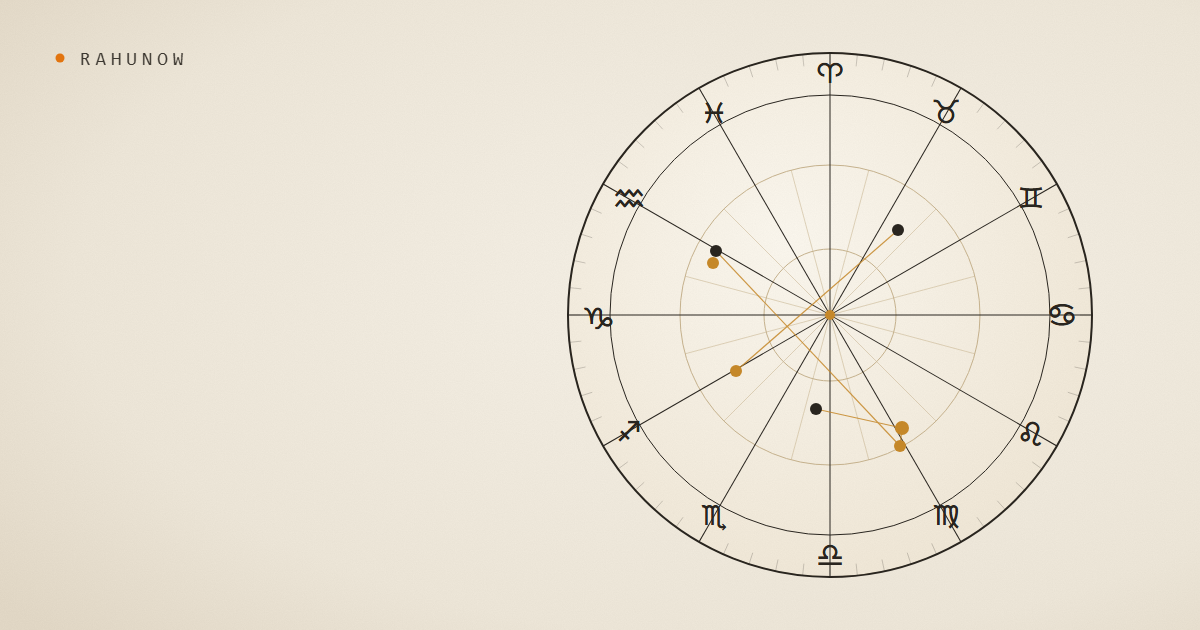
Pancha Mahapurusha Yoga is among the most celebrated combinations in Vedic astrology, a set of five yogas (planetary combinations that concentrate a particular result) that mark the chart of a person of unusual capacity. The name translates as the five great-person yogas: pancha (five), mahapurusha (great person), yoga (combination). Each of the five is formed by one of the five star-planets, and understanding them is a good way to see how Jyotish (Vedic astrology) turns planetary strength into a statement about character and worldly success.
The rule is elegantly simple. A Mahapurusha Yoga forms when Mars, Mercury, Jupiter, Venus or Saturn occupies a kendra (an angular house, meaning the first, fourth, seventh or tenth from the ascendant) while sitting in its own sign (swakshetra) or in its sign of exaltation (uccha). The Sun, Moon and the nodes do not form these yogas; only the five true planets do. Because kendras are the load-bearing houses of a chart, a strong planet placed there projects its qualities across the whole life.
The five yogas, one per planet
- Ruchaka Yoga (Mars): formed when Mars is strong in an angle. It gives courage, physical vigour, leadership and a commanding presence. The classical Ruchaka native is a soldier, athlete or fearless organiser.
- Bhadra Yoga (Mercury): formed by a strong Mercury in an angle. It gives sharp intelligence, eloquence, skill in trade and analysis, and a youthful, adaptable mind. Well suited to scholarship, writing and commerce.
- Hamsa Yoga (Jupiter): formed by a strong Jupiter in an angle. It gives wisdom, ethics, respect, learning and a naturally benevolent nature. Hamsa, the swan, is associated with purity and discernment.
- Malavya Yoga (Venus): formed by a strong Venus in an angle. It gives beauty, charm, refinement, comfort and success in the arts and relationships.
- Sasa Yoga (Saturn): formed by a strong Saturn in an angle. It gives discipline, endurance, organisational power and authority won through sustained effort, often over people or systems.
Why the angle and the dignity both matter
The two conditions do different jobs. The kendra placement gives the planet a platform, because angular houses are where a chart expresses itself most visibly in the world. The dignity, own sign or exaltation, guarantees the planet has the quality to fill that platform well. A planet that is angular but weak is loud without substance; a planet that is strong but hidden in a difficult house has substance without a stage. Mahapurusha Yoga requires both, which is why it is comparatively rare and correspondingly significant.
It is worth being sober here. A Mahapurusha Yoga is a strong indicator, not a guarantee of fame or fortune, and it does not override the rest of the chart. Other placements, the condition of the ascendant lord, and the sequence of dashas (planetary periods) all decide when and how the yoga actually delivers. Reputable astrology never promises a fixed outcome, and none of this should be read as financial or career advice.
When the yoga expresses itself
A yoga present in the birth chart is like a seed; the dasha system decides the season in which it flowers. A Hamsa Yoga person, for instance, may live an ordinary early life and then come into their wisdom and standing during the mahadasha (major period) or antardasha (sub-period) of Jupiter, the planet forming the yoga. This is why two people with the same yoga can have it activate at very different ages. To see the timing rather than just the potential, the personal year-ahead forecast maps which planetary periods are running and when the relevant planet takes charge.
Checking your own chart
The conditions are concrete enough that you can check for a Mahapurusha Yoga yourself. Cast a free Vedic birth-chart calculator, find the four angular houses from your lagna (rising sign), and see whether Mars, Mercury, Jupiter, Venus or Saturn sits in any of them in its own or exaltation sign. If one does, you have the corresponding yoga. For the fuller picture, including how the yoga interacts with the rest of your chart and its periods, the guided life reading reads it in context rather than in isolation.
The five great-person yogas endure in popularity because they are both dignified and checkable: a clear rule, a memorable set of names, and a genuine claim about how planetary strength shapes a life. Find the strong planet in your angles, and you have found the seed of the yoga.
Frequently asked questions
What is Pancha Mahapurusha Yoga?
It is a set of five raja yogas formed when Mars, Mercury, Jupiter, Venus or Saturn sits in an angular house (1, 4, 7 or 10) in its own sign or its sign of exaltation. Each planet forms one of the five yogas, marking a chart of unusual capacity.
What are the names of the five yogas?
Ruchaka Yoga from Mars, Bhadra Yoga from Mercury, Hamsa Yoga from Jupiter, Malavya Yoga from Venus, and Sasa Yoga from Saturn. Each carries the qualities of its forming planet, from courage and intellect to wisdom, refinement and discipline.
Do the Sun, Moon, Rahu or Ketu form this yoga?
No. Only the five true planets, Mars, Mercury, Jupiter, Venus and Saturn, form Pancha Mahapurusha Yoga. The Sun, Moon and the lunar nodes Rahu and Ketu are excluded from this particular scheme.
Does having this yoga guarantee success?
No. It is a strong positive indicator, but it does not override the rest of the chart, and its results depend on the ascendant lord, other placements and the dasha timing. It should not be treated as a guarantee or as financial advice.
Sources
Related reads
Keep exploring
Researched and written by SuperPandit’s AI, grounded in our own astronomical engine. Spotted something off? Tell us.