Bhakoot Dosha in Kundli Matching: When 7 Points Go to Zero
Bhakoot carries the most weight of any single koota in Guna Milan, and it scores all or nothing. What the 6-8, 2-12 and 5-9 moon-sign pairs mean, and the conditions that cancel the dosha.
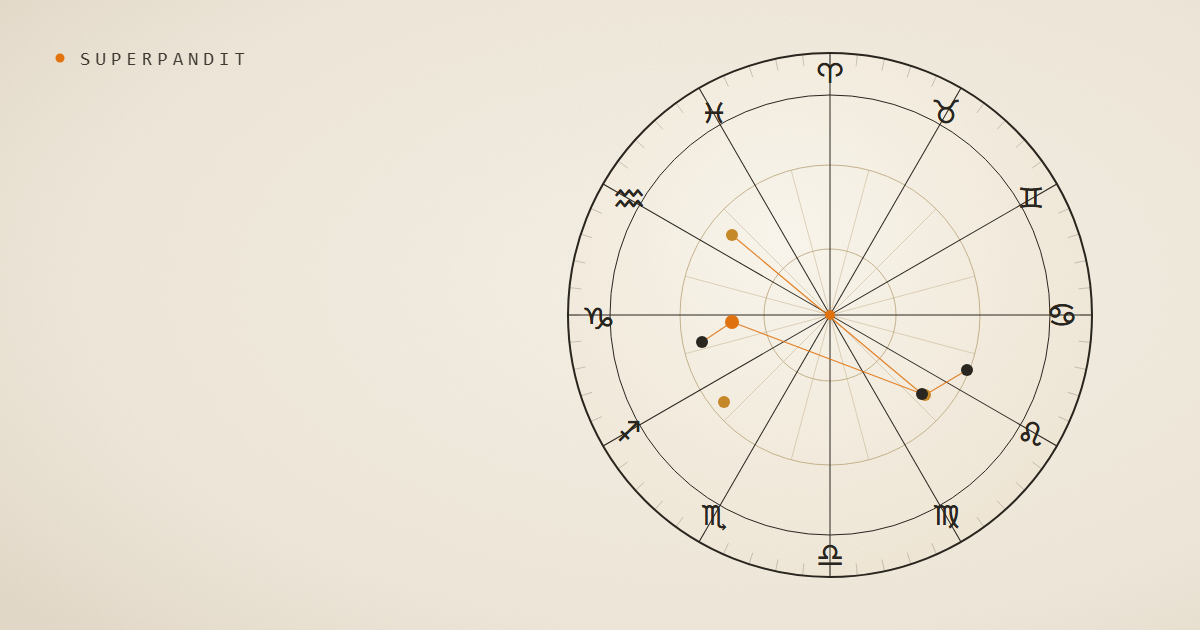
Bhakoot dosha is the single heaviest deduction in kundli matching for marriage. Of the thirty-six points in Guna Milan — the Ashtakoota system that compares two birth charts — Bhakoot alone carries seven, and unlike most of the other kootas it does not award partial credit. You either get all seven or you get zero. That all-or-nothing structure is why a couple can look broadly compatible and still land at 18 out of 36, and why this one factor causes more matches to be rejected than any other except Mangal dosha.
What Bhakoot measures
Bhakoot, also called Rashi koota, compares the two moon signs — the chandra rashi of the prospective bride and groom — and counts the positional relationship between them in both directions.
The scoring is mechanical. Count the number of signs from the girl's moon sign to the boy's, and then from the boy's back to the girl's. If the pair falls into one of three relationships, Bhakoot scores zero:
- 6 and 8 (Shadashtak). The moon signs are six signs apart one way and eight the other. Traditionally read as the most difficult, associated with friction, health strain and, in the older texts, threat to longevity.
- 2 and 12 (Dwirdwadash). Two signs one way, twelve the other. Read as financial strain and loss, with one partner's expenditure or obligations weighing on the other.
- 5 and 9 (Navam Pancham). Five one way, nine the other. Read as difficulty with children and with the flow of dharma between the couple.
Every other relationship — 1 and 1, 3 and 11, 4 and 10, 7 and 7 — scores the full seven points.
That last one is worth pausing on. A 7 and 7 relationship means the moon signs are directly opposite, which most people assume is bad. In Bhakoot it is not; opposition is treated as a valid axis and scores full marks.
Why the classical texts weight it so heavily
The Moon in Jyotish (Vedic astrology) is not a minor body. It governs the mind, emotional response, comfort and the day-to-day experience of being alive. Guna Milan is built entirely on the Moon — every one of the eight kootas is calculated from the moon's nakshatra or moon's sign, not from the ascendant.
Bhakoot is the koota that asks whether two minds occupy compatible positions in the zodiac. The 6-8 axis in particular is the axis of the sixth house (conflict, disease, debt) and the eighth (upheaval, longevity, the unseen), which is why the texts treat it with more caution than the others.
This is also the honest limit of the system. Guna Milan measures the Moon well and almost nothing else. It does not read the seventh house, the seventh lord, Venus, Jupiter, the Navamsa (D9) chart, or the dashas each person is running — all of which matter more to how a marriage actually goes than a moon-sign grid does.
When Bhakoot dosha is cancelled
Classical practice recognises several cancellations, and a competent astrologer checks all of them before rejecting a match on Bhakoot alone.
- Same rashi lord. If both moon signs are ruled by the same planet — for example Aries and Scorpio, both ruled by Mars, or Taurus and Libra, both ruled by Venus — the dosha is cancelled. This alone cancels a large share of 6-8 pairs.
- Friendly rashi lords. If the lords of the two moon signs are mutual friends in the standard planetary friendship scheme, the dosha is considered nullified or substantially reduced.
- Full Nadi and Gana score. Where the Nadi koota gives its full eight points and the Gana koota is clean, many traditions treat Bhakoot as neutralised.
- Same nakshatra lord, different padas. If both moons fall in nakshatras ruled by the same planet, the affliction is held to be cancelled.
- Strong Navamsa agreement. A modern but widely followed check: if the D9 charts show a supportive seventh house for both, Bhakoot carries much less weight.
A 6-8 pair with a shared rashi lord and clean Nadi is not the same case as a 6-8 pair with no cancellation and an afflicted seventh lord, even though both show the same seven-point deduction on the printout.
Two worked examples make the cancellation rule concrete. Aries and Scorpio moon signs are six and eight signs apart, so the raw score is zero — but both signs are ruled by Mars, so the dosha is cancelled and the pair is treated as clean. Taurus and Libra are also a 6-8 pair, and both are ruled by Venus, so the same cancellation applies. Gemini and Capricorn, by contrast, are 6-8 apart with Mercury and Saturn as lords, which are friendly in the standard scheme, so the affliction is reduced rather than removed outright. The point is that the printed deduction and the actual reading can differ substantially, and only the second one is worth acting on.
How much should a Bhakoot deduction actually decide
A practical position, and the one most working astrologers take: Bhakoot is a flag, not a verdict.
Losing seven points takes a match from a possible 36 to a maximum of 29, which will usually still clear the conventional 18-point threshold on its own. What the flag should trigger is a closer reading — the seventh house from both charts, the position of Venus and Jupiter, the Navamsa, the Mangal dosha check, and whether the couple's dashas run in step or against each other in the first years of marriage.
What it should not trigger is a decision made from a number alone. Two people who have already built something real should not have it undone by a koota that measures one variable.
Our Guna Milan and Ashtakoota compatibility check computes all eight kootas from two birth charts, runs the Mangal dosha (manglik) test alongside, and shows which cancellations apply rather than only printing a score. If you want the underlying concepts first — moon signs, nakshatras, the twelve houses — the plain-language explainers cover them without assuming any background.
Frequently asked questions
How many points does Bhakoot dosha cost in kundli matching?
Seven of the thirty-six points in Guna Milan. Bhakoot scores all or nothing, so an afflicted pair gets zero out of seven rather than a partial score. That caps the maximum achievable total at 29 points.
Which moon sign combinations cause Bhakoot dosha?
Three relationships between the two moon signs: 6 and 8 apart (Shadashtak), 2 and 12 apart (Dwirdwadash), and 5 and 9 apart (Navam Pancham). All other relationships, including directly opposite signs at 7 and 7, score the full seven points.
Can Bhakoot dosha be cancelled?
Yes, and it commonly is. The main cancellations are a shared rashi lord between the two moon signs, mutually friendly rashi lords, a full Nadi koota score with a clean Gana koota, and both moons falling in nakshatras ruled by the same planet. Each of these is recognised in classical practice.
Is a 6-8 Bhakoot match always rejected?
No. It is the most cautioned-against of the three, but it cancels whenever the two moon signs share a ruling planet, which is true of several 6-8 pairs. A responsible reading checks the seventh house, Venus, Jupiter and the Navamsa chart before treating the deduction as decisive.
Is Guna Milan enough to decide a marriage?
It is a screening tool, not a full analysis. Every one of the eight kootas is calculated from the Moon, so the system says nothing about the seventh house, its lord, the Navamsa chart, or the dasha periods each person is running. Those factors describe how a marriage actually unfolds, and a complete reading includes them.
Sources
Related reads
Keep exploring
Researched and written by SuperPandit’s AI, grounded in our own astronomical engine. Spotted something off? Tell us.