Kundli Matching by Date of Birth: What the Match Really Uses
Kundli matching by date of birth needs more than the date. How time and place fix the Moon's nakshatra, what the eight kootas score out of 36, when matching by name is used, and what a score leaves out.
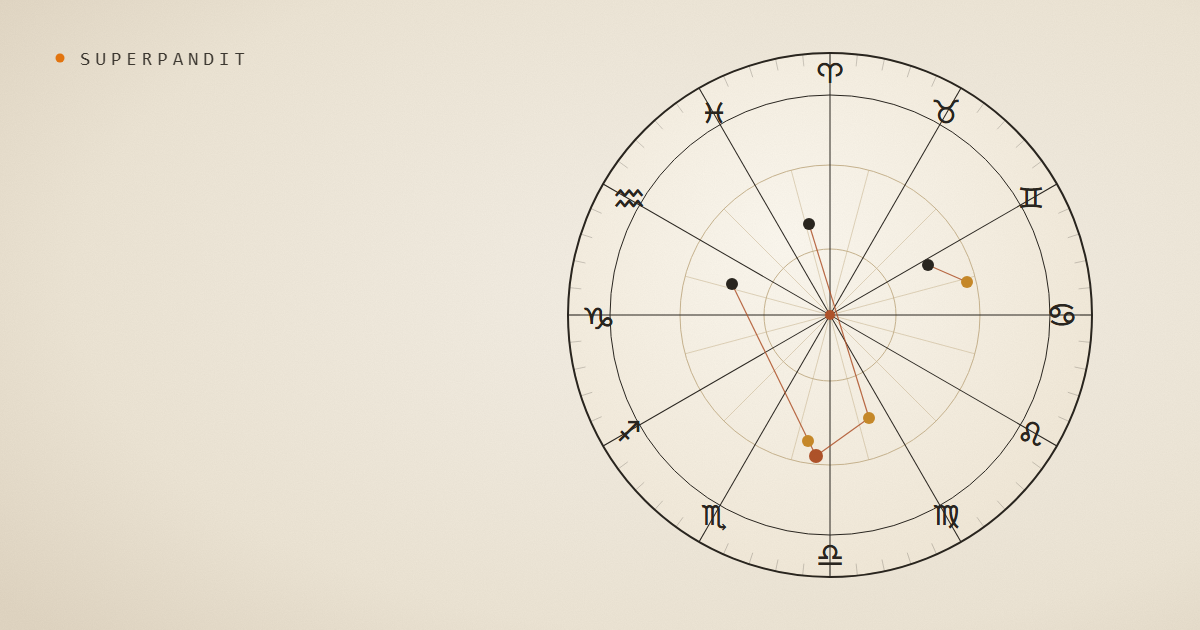
Kundli matching by date of birth is how most families in India begin a marriage conversation: two sets of birth details go into a calculator and a score out of 36 comes back. But the date is only one of three inputs, and the score is only the first layer of a proper match. This guide explains what kundali matching by date of birth actually uses, how a birth date becomes the Moon's nakshatra (lunar mansion), what each of the eight kootas (matching categories) scores, when matching by name is used instead, and the checks a score alone does not cover.
What kundli matching by date of birth really needs
A reliable match needs three details for each person:
- Date of birth. This fixes the rough position of every planet.
- Time of birth. This fixes the Moon's exact degree and the lagna (the rising sign). The Moon moves quickly, so the time matters far more than most people expect.
- Place of birth. This supplies latitude, longitude and time zone, which convert local clock time into the astronomical moment the chart is built on.
The matching method most families use, Guna Milan or Ashtakoota (the eight-part system), scores the two Moons against each other. So when people say matching by date of birth, what the calculator is really comparing is the Moon's sign and nakshatra at that date, time and place.
How a birth date becomes a Moon nakshatra
The zodiac is divided into 27 nakshatras of 13 degrees 20 minutes each. The Moon travels roughly 12 to 15 degrees a day, so it changes nakshatra about once a day and changes sign about every two and a quarter days.
That has a practical consequence. On many dates the Moon crosses from one nakshatra into the next at some hour. Two people born on the same date, one at 6 AM and one at 10 PM, can have different nakshatras, and occasionally different Moon signs. Since several kootas depend directly on the nakshatra, a wrong time can move a score by several points. If a family knows only the date, the honest approach is to check both possible nakshatras and treat the result as a range rather than a single number.
You can see your own Moon sign, nakshatra and pada (quarter of the nakshatra) in the free kundli calculator before running a match.
The eight kootas and their 36 points
Ashtakoota compares the two Moons across eight categories. The points rise with the weight tradition gives each one:
- Varna (1 point): temperament and spiritual orientation, from the Moon sign.
- Vashya (2): mutual influence and natural attraction.
- Tara (3): birth-star harmony, counted between the two nakshatras.
- Yoni (4): instinctive and physical compatibility, from the animal symbols of the nakshatras.
- Graha Maitri (5): friendship between the lords of the two Moon signs, a proxy for mental rapport.
- Gana (6): nature, grouped as deva (gentle), manushya (human) and rakshasa (fierce).
- Bhakoot (7): the relative position of the two Moon signs, read for family welfare and prosperity.
- Nadi (8): the highest-weight koota, traditionally read for health and progeny.
The common convention is that 18 of 36 is the minimum for a match to be considered, 18 to 24 is average, and higher is favourable. Bhakoot and Nadi carry 15 points between them, which is why a zero in either feels dramatic. Our explainer on Bhakoot dosha and when it is cancelled covers that situation in detail.
Matching by name versus matching by date of birth
When the birth time is unknown, some families use marriage matching by name. The first syllable of the name is mapped to a nakshatra pada using the traditional syllable table, and that nama nakshatra (name star) stands in for the birth nakshatra.
It is a workable fallback, but it is less precise:
- Names are often chosen for reasons other than the syllable table, so the name star may have nothing to do with the real Moon.
- Nicknames, spellings and regional pronunciations change the first syllable.
- Only the Moon-based kootas can be approximated. Checks that need the full chart, such as Mangal dosha, cannot be done by name at all.
If even an approximate birth time is available from a hospital record, a horoscope written at birth, or a reliable family memory, a date-based match is the better starting point.
What the Guna Milan score does not tell you
A Guna Milan score compares two Moons. It does not read the rest of either chart. A careful astrologer also looks at:
- Mangal dosha (manglik status): Mars in certain houses from the lagna, Moon or Venus. It has well-known cancellation rules, set out in our guide on how to check Mangal dosha and when it cancels.
- Dosha cancellations: Bhakoot and Nadi doshas are often considered cancelled when the Moon-sign lords are the same or friendly, or when other classical conditions hold.
- The 7th house and its lord in each chart, and Venus, the natural significator of partnership.
- The navamsa (D9 chart), the divisional chart read specifically for marriage.
- Dasha timing, since two good charts running difficult periods together can still struggle for a while.
This is why a 30-point match can come with cautions and a 20-point match can be approved with confidence.
Common mistakes that change the result
Most surprising scores come from data errors rather than from the stars:
- AM and PM swapped, or a 24-hour time entered as a 12-hour one.
- Wrong birthplace, especially towns that share a name across states.
- Time zone errors for people born abroad, including daylight saving time.
- Rounded times such as exactly 12:00 when the family only remembers that it was around midday.
- Different ayanamsa settings between two apps, which can occasionally shift a Moon that sits near the edge of a nakshatra.
Before reading anything into a score, confirm the inputs with both families. When you have both sets of details ready, run them through our kundli matching calculator, which scores all eight kootas and adds a Mangal dosha check for both charts.
Frequently asked questions
Can kundli matching be done with only the date of birth?
It can give a rough result, but the Moon changes nakshatra about once a day, so the time of birth can change the nakshatra and several koota scores. If only the date is known, check both possible nakshatras and treat the score as a range.
How many gunas should match for marriage?
The common convention is that 18 of 36 gunas is the minimum, 18 to 24 is average and higher is favourable. Astrologers still check Mangal dosha, dosha cancellations, the 7th house and the navamsa before advising on a match.
Is marriage matching by name accurate?
Matching by name maps the first syllable of the name to a nakshatra and is used when the birth time is unknown. It is less precise than matching by date of birth because names are not always chosen by the syllable table, and it cannot check Mangal dosha.
Why do different apps give different kundli matching scores?
Usually because of input differences, such as a swapped AM and PM, a different birthplace or time zone, or a different ayanamsa setting. These can move the Moon into a neighbouring nakshatra and change several koota scores.
Sources
Related reads
Keep exploring
Researched and written by SuperPandit’s AI, grounded in our own astronomical engine. Spotted something off? Tell us.