No Weddings in Chaturmas: The Muhurat Pause of 2026
From Devshayani Ekadashi on 25 July to late November 2026, Hindu wedding muhurats pause for Chaturmas. Why the marriage season stops and when it reopens.
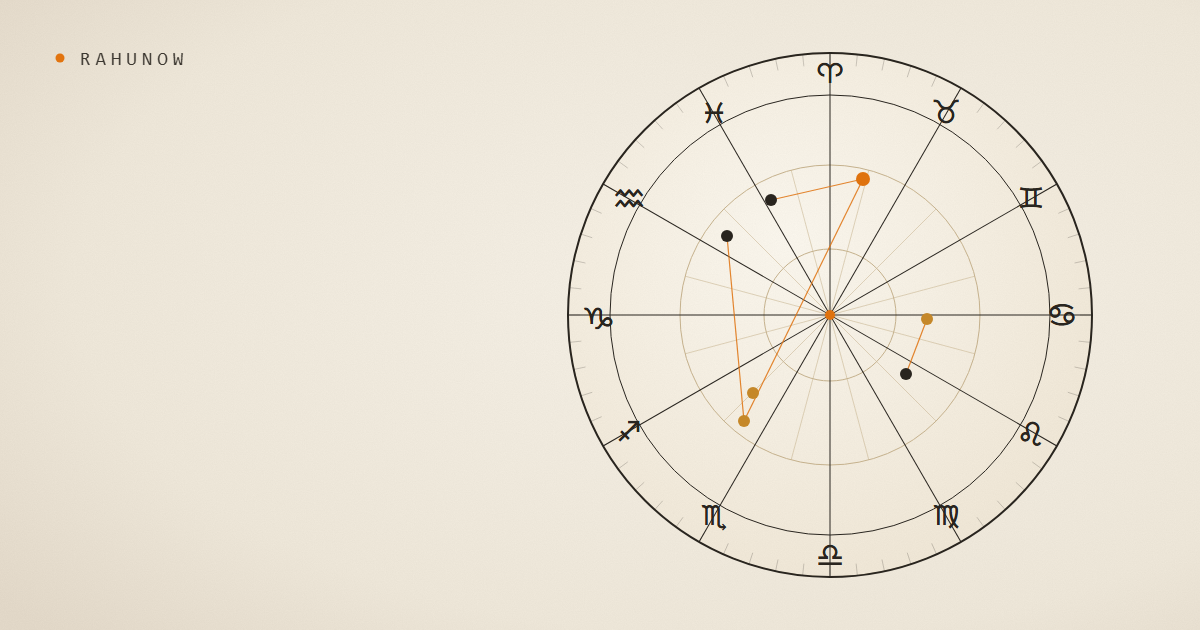
If you are trying to fix a Hindu wedding date this year, you will run into a wall in late July. From Devshayani Ekadashi on 25 July 2026 until the Kartika awakening in late November, wedding muhurats, the auspicious electional windows for marriage, largely disappear. This four-month gap is Chaturmas, and understanding why it exists saves a great deal of confusion when families sit down to plan.
What a wedding muhurat actually is
A muhurat is an elected moment, a slice of time chosen so that its planetary and panchang conditions support the activity being undertaken. For a wedding, astrologers look at several factors together: a supportive tithi (lunar day), a favourable nakshatra (star) such as Rohini, Uttara Phalguni or Swati, the day of the week, and, critically, the state of Jupiter and Venus. Jupiter (Guru) is the natural significator of the husband and of dharma; Venus (Shukra) signifies the wife, love and marital happiness. A wedding is traditionally not fixed when either of these is weak.
That last point is the key to the whole Chaturmas rule. You can explore how these factors combine on any date with an electional muhurat finder, which weighs the panchang and planetary conditions for a chosen window.
Why Chaturmas closes the marriage season
There are two overlapping reasons, one devotional and one technical.
The devotional reason is the one most people cite. On Devshayani Ekadashi, Vishnu is said to enter Yoga Nidra, a four-month cosmic sleep, and marriage is a sacrament witnessed by Vishnu. With the witness at rest, priests hold major sacraments until he wakes on Prabodhini Ekadashi in Kartika.
The technical reason concerns Jupiter and Venus. Marriages are avoided when Venus or Jupiter is combust, that is, too close to the Sun and lost in its glare, or when either is set (not visible in the sky). Across a given year these combustion and setting periods remove many otherwise-usable dates. When they overlap the Sun's southward Dakshinayana half, which begins at Karka Sankranti around 16 July, the available marriage windows shrink dramatically. The devotional and technical calendars reinforce each other.
What pauses and what does not
During Chaturmas the ceremonies that traditionally pause include:
- Vivah (marriage) and engagement fixing
- Griha Pravesh (house-warming into a new home)
- Upanayana (the sacred-thread ceremony)
- Major new-venture and foundation ceremonies
What continues, and even intensifies, are devotional and vrat-based observances: the Mondays of Sawan, Ganesh Chaturthi, Navratri, and Diwali all fall inside Chaturmas. So the season is busy; it is simply oriented towards worship rather than worldly beginnings. For any given day, the auspicious and inauspicious segments are visible in the daily panchang.
When wedding muhurats return
The marriage season reopens after Prabodhini Ekadashi (Devutthana Ekadashi) in the month of Kartika, in 2026 in late November, when Vishnu is ceremonially woken. From then through the following months the calendar again offers clusters of vivah muhurats, subject as always to Jupiter and Venus being clear of combustion. Families planning a late-2026 or early-2027 wedding usually target this reopening.
If your dates are fixed by circumstance and you cannot wait, this is exactly the kind of situation where a practitioner's judgement matters, weighing a chart against an imperfect window. You can speak with an astrologer to talk through the options for your specific case.
Planning around the pause
The practical takeaway is simple. If you want a traditionally clean wedding muhurat in 2026, look either before Devshayani Ekadashi on 25 July or after the Kartika awakening in late November, and confirm that Jupiter and Venus are well placed and visible on your chosen date. To test specific windows for yourself, start with the muhurat finder.
Frequently asked questions
Why are there no wedding dates during Chaturmas?
During Chaturmas, Vishnu is said to be in cosmic sleep for four months, beginning on Devshayani Ekadashi. Because marriage is a sacrament witnessed by Vishnu, priests hold major ceremonies until he wakes on Prabodhini Ekadashi. Technically, Jupiter and Venus combustion periods in this window also remove usable dates.
When does Chaturmas 2026 begin and end?
Chaturmas 2026 begins on Devshayani Ekadashi, Saturday 25 July, and ends on Prabodhini Ekadashi in the month of Kartika, in late November. Wedding and other major auspicious ceremonies traditionally pause for this roughly four-month period and resume after the Kartika awakening.
Can a wedding still happen during Chaturmas if necessary?
Traditional astrologers avoid fixing wedding muhurats during Chaturmas. If circumstances force a date within this period, it becomes a matter for careful individual judgement of the chart against an imperfect window, rather than a standard muhurat. It is best discussed with a practitioner for the specific case.
Which planets must be strong for a wedding muhurat?
Jupiter (Guru) signifies the husband and dharma, and Venus (Shukra) signifies the wife and marital happiness. A wedding is traditionally not fixed when either is combust, meaning too close to the Sun, or set and not visible in the sky. Their condition is a decisive factor in choosing a marriage date.
When do wedding muhurats return after Chaturmas 2026?
Wedding muhurats return after Prabodhini Ekadashi in the month of Kartika, in late November 2026, when Vishnu is ceremonially awakened. From then the calendar again offers clusters of marriage dates, subject to Jupiter and Venus being clear of combustion and visible.
Sources
Related reads
Keep exploring
Researched and written by SuperPandit’s AI, grounded in our own astronomical engine. Spotted something off? Tell us.