Ashtakavarga: The 337-Point Scorecard Inside Your Chart
Most of Vedic astrology speaks in adjectives. Ashtakavarga speaks in numbers you can check. Eight contributors award points to twelve signs, always totalling 337 — and the score tells you whether a transit will actually deliver. Here is how to read it.
Most of Jyotish (Vedic astrology) speaks in adjectives: this planet is strong, that house is afflicted. Ashtakavarga speaks in numbers you can actually check — and it is the closest thing the tradition has to a scoring system. It is laid out in the Brihat Parashara Hora Shastra, which is why it counts as core method rather than a modern shortcut, and it remains the single most practical tool for deciding whether a given transit will deliver anything at all.
Quick answer: The name means "the group of eight". Eight reference points — the seven classical planets plus the lagna, the rising sign — each award marks called bindus to the twelve signs. Add every planet's marks together and you get the Sarvashtakavarga, one number per sign, always summing to 337 across the zodiac. Higher scores mark signs where transits land and stick; lower scores mark signs where they disappoint.
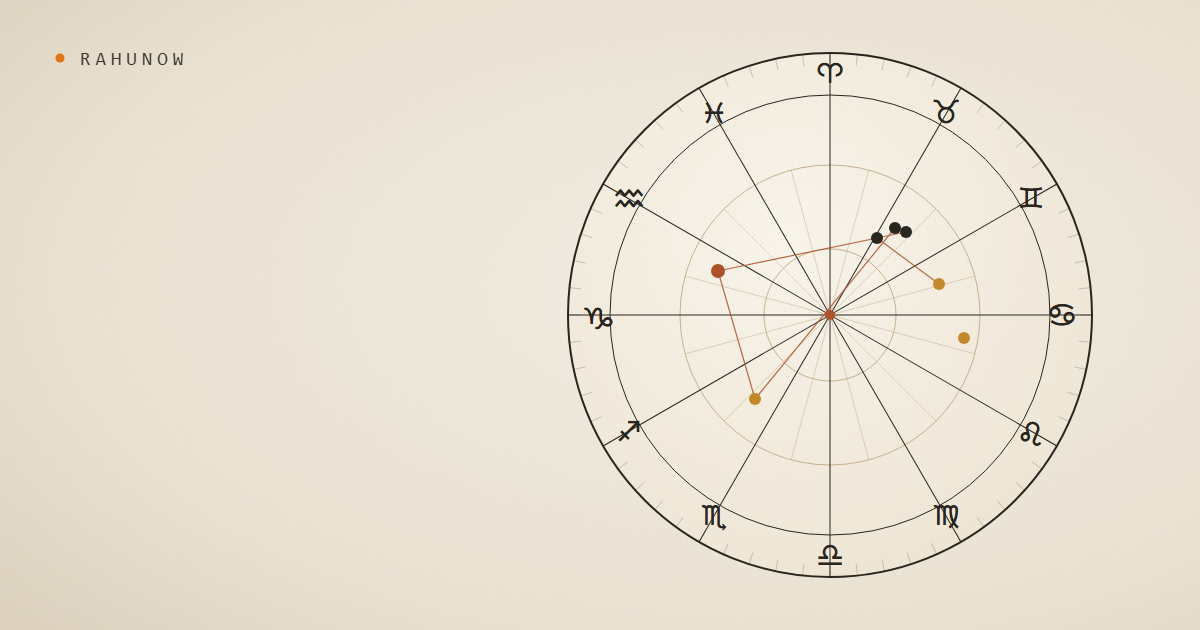
 Ashtakavarga scores every sign for support — a numerical map laid over the sky. Image: Wikimedia Commons.
How the scorecard is built
Each of the eight contributors has its own rule set specifying which houses, counted from it, receive a bindu. Apply the rules and each planet gets a table with a number from 0 to 8 in every sign. That single-planet table is the bhinnashtakavarga (BAV) — the individual scorecard. Lay the seven planetary tables on top of one another and add them sign by sign and you get the sarvashtakavarga (SAV) — the combined scorecard most people mean by "my Ashtakavarga". Nobody computes these by hand any more; any chart engine produces both, including the free Vedic birth chart calculator.
The number 337, and why it matters
The SAV total is always 337 — not usually, always. It is a fixed property of how the rules are built. Divide 337 by twelve and you get about 28, the natural average and the line the whole system depends on.
| SAV score | Reading | What transits do here |
|---|---|---|
| Above 30 | Strong | Results arrive and stick |
| 28–30 | Average | Transit behaves as its nature suggests |
| 25–28 | Below par | Slow, partial, effortful |
| Below 25 | Weak | Transits tend to disappoint regardless of planet |
Because the total is fixed, a high score somewhere is always paid for by a low score elsewhere. No chart is strong in all twelve signs, so reading Ashtakavarga is about relative strength within your own chart, never comparison between charts.
The most useful thing it does
Standard transit reading tells you Saturn is in your 8th house. Ashtakavarga tells you whether that 8th house holds 22 bindus or 34 — and that gap is usually larger than the difference between houses.
The SAV tells you a sign's general fertility. The BAV tells you whether a specific planet will do well there. When a planet is about to transit a sign, check that planet's own BAV score for the sign: four bindus or more and the transit is likely productive; three or fewer and it is likely to underdeliver even if the SAV total is healthy. This single filter is why Ashtakavarga is usually taught as a transit tool.
There is also a well-known refinement called the kaksha system, which divides each sign into eight sub-segments — one for each contributor — and lets you judge a transit almost day by day rather than sign by sign. When a slow planet crosses a kaksha whose owner gave it a bindu, the days tend to go smoothly; when it crosses an empty one, the same weeks feel heavier. It is a level of precision most transit articles never reach, and it comes entirely out of the same 337-point framework, which is a good measure of how much information the system actually holds.
Reading it in practice
- Find the extremes. Note the two or three signs with the highest and lowest SAV — those are the strong and weak zones of your life, read through the houses they occupy from your lagna.
- Check the 10th and 11th. High totals here are traditionally linked to steady professional standing and steady income.
- Look ahead at the slow planets. Saturn, Jupiter, Rahu and Ketu spend a year or more per sign; knowing the bindu counts of the signs they are entering tells you a great deal about the next few years.
- Cross-check with the dasha. Ashtakavarga describes capacity; the Vimshottari dasha describes timing. A personal year-ahead transit and dasha forecast puts the two side by side.
What Ashtakavarga does not do
The numerical form invites more confidence than it deserves, so be clear about the limits. It tells you how much support a sign offers, not what will happen. It does not replace house lordship, yogas or dasha analysis, and it says nothing about the nature of an event — only its likely strength. The classical reduction steps, trikona shodhana and ekadhipatya shodhana, are applied inconsistently across schools, so two software packages can give different reduced figures while agreeing on the raw ones. Within those limits it is the most honest instrument in the kit: a number you can check beats an adjective you cannot.
To see your own bindu tables read against your running periods rather than in the abstract, an in-depth guided chart reading works through the structure, and RahuNow's one-on-one astrologer consultations are there if you would rather ask questions directly.
Frequently asked questions
What is a bindu in Ashtakavarga?
A bindu is a single point of support awarded to a sign by one of the eight contributors — the seven classical planets plus the lagna. Each sign holds between 0 and 8 bindus in an individual planetary table. The word simply means a point or dot.
Why does Sarvashtakavarga always total 337?
The total is a fixed consequence of how the awarding rules are constructed. Every correctly computed Sarvashtakavarga sums to 337 across the twelve signs, giving an average of about 28 per sign. That average is the reference line for judging a sign strong or weak.
How many bindus is a good score?
Above 30 is generally strong, 28 to 30 average, 25 to 28 below par and under 25 weak. Schools use slightly different cut-offs, but all measure distance from the natural average of 28 rather than an absolute standard.
How do I use Ashtakavarga for transits?
Before a slow planet enters a sign, check that planet own bhinnashtakavarga score for the sign. Four bindus or more usually indicates a productive transit; three or fewer suggests it will underdeliver. This filter is more informative than reading the transiting house alone.
Does Ashtakavarga include Rahu and Ketu?
The standard Sarvashtakavarga is built from the seven classical planets and the lagna, so Rahu and Ketu are not among the eight contributors. Some traditions compute a separate Rahu Ashtakavarga, but it is not part of the 337-point framework in the Brihat Parashara Hora Shastra.
Sources
Related reads
Keep exploring
Researched and written by SuperPandit’s AI, grounded in our own astronomical engine. Spotted something off? Tell us.