The 12 Houses in Vedic Astrology: What Each Bhava Rules
The 12 houses, or bhavas, are the stage on which the planets act in a Vedic chart. This is a clear, house-by-house guide to what each one governs and how to read them together.
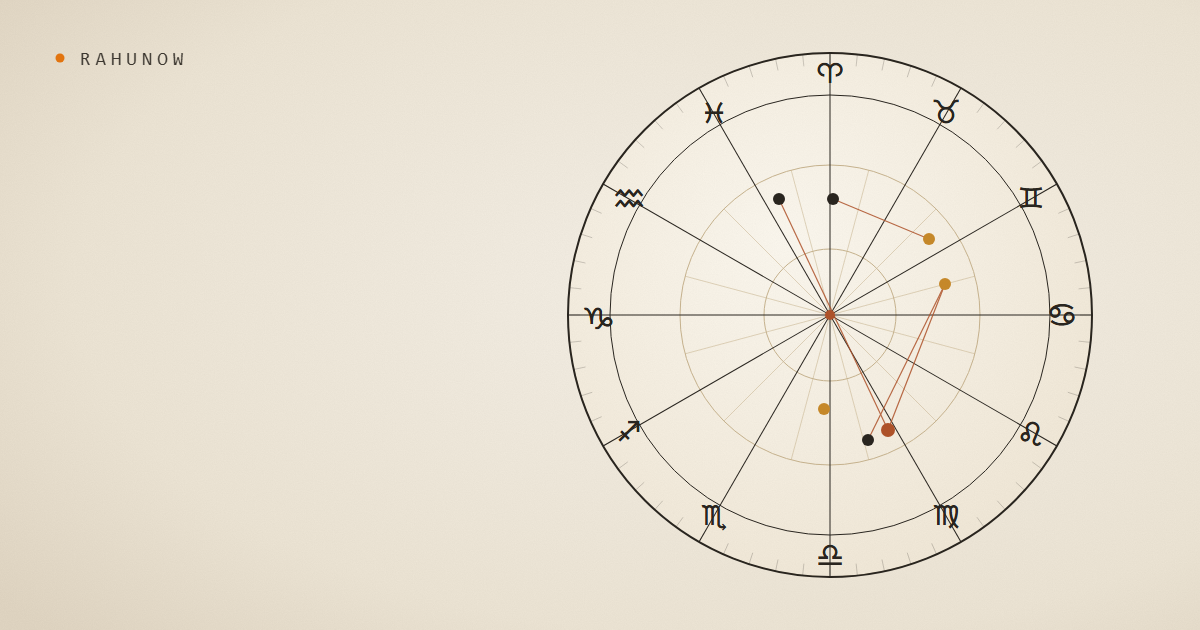
The 12 houses in Vedic astrology, called bhavas (the Sanskrit word for house or field of experience), are the frame that turns a scatter of planets into a readable life. If the grahas (planets) are the actors and the rashis (signs) are their costumes, the bhavas are the rooms of the house they walk into, each one governing a different department of life. Learning what the twelve houses rule is the single most useful step a beginner can take, because almost every prediction in Jyotish (Vedic astrology) is really a statement about a planet, a sign and a house working together.
The first house begins at your lagna (the rising sign, the point of the zodiac climbing over the eastern horizon at your birth), and the remaining eleven follow in order around the chart. In the North Indian chart the first house is fixed at the top; in the South Indian chart the signs are fixed and the ascendant is marked. Either way, the meaning of the houses is the same.
The four goals behind the houses
The twelve houses are grouped around the four purusharthas, the aims of human life: dharma (purpose and right action), artha (resources and security), kama (desire and relationship) and moksha (liberation). Houses 1, 5 and 9 are the dharma houses; 2, 6 and 10 the artha houses; 3, 7 and 11 the kama houses; and 4, 8 and 12 the moksha houses. This is not decoration. It explains why, for example, the ninth house of fortune and the fifth house of creativity feel related: both belong to the dharma group.
Houses one to six: the personal half
- First house (Tanu Bhava): the self, the body, physical vitality and overall direction. The strongest single indicator of who you are.
- Second house (Dhana Bhava): accumulated wealth, family, food and speech. What you hold and how you speak.
- Third house (Sahaja Bhava): courage, effort, siblings, short journeys and skill with the hands. The house of self-made initiative.
- Fourth house (Sukha Bhava): home, mother, property, vehicles and inner peace. The seat of emotional security.
- Fifth house (Putra Bhava): intelligence, creativity, children, romance and, importantly, purva punya (the merit carried from past actions).
- Sixth house (Ari Bhava): health and illness, debts, enemies, daily work and service. A difficult house that also rewards discipline.
Houses seven to twelve: the outward half
- Seventh house (Yuvati Bhava): marriage, partnership, business alliances and the public. The mirror of the first house.
- Eighth house (Randhra Bhava): transformation, inheritance, joint resources, longevity and hidden matters. The house of deep change.
- Ninth house (Dharma Bhava): fortune, higher learning, the father, teachers and belief. Widely considered the most benefic house.
- Tenth house (Karma Bhava): career, status, authority and public reputation. The peak of the chart and the seat of action in the world.
- Eleventh house (Labha Bhava): gains, income, networks, elder siblings and the fulfilment of desires.
- Twelfth house (Vyaya Bhava): loss, expenditure, foreign lands, sleep, and moksha (spiritual liberation). Endings and what lies beyond the self.
How the houses are actually read
A house is never read in isolation. Three things matter at once. First, which sign falls on the house, because that sets its ruling planet. Second, where that ruling planet (the bhava lord) sits and how strong it is, because the lord carries the house's affairs wherever it goes. Third, which planets occupy or aspect the house. A tenth house of career, for instance, is judged by the sign on it, by the placement of its lord, and by any grahas sitting in or looking at it.
The kendras (the angular houses 1, 4, 7, 10) and the trikonas (the trinal houses 1, 5, 9) are the pillars of a strong chart, while the dusthanas (the difficult houses 6, 8, 12) carry friction and growth through hardship. When a lord of a good house also rules or connects to another good house, the classic yogas (planetary combinations that concentrate a result) begin to form.
Seeing it in your own chart
The fastest way to make the bhavas real is to look at your own. Cast a free Vedic birth-chart calculator and note which sign sits on each house from your lagna; that alone tells you which planet governs each department of your life. From there, the guided life reading walks through the houses with their lords and occupants, and the guided snapshot shows how they play out across your dasha and transits.
Once the twelve houses are clear, the rest of Jyotish stops feeling like a jumble of symbols and starts reading like a map. Every planet is somewhere; every somewhere is a house; and every house is one of these twelve rooms of a life.
Frequently asked questions
What are the 12 houses in Vedic astrology?
The 12 houses, or bhavas, are twelve divisions of the chart that each govern a department of life, from the self and wealth to partnership, career and liberation. They begin at the ascendant and run in order around the chart.
Which are the most important houses?
The kendras (1, 4, 7, 10) and trikonas (1, 5, 9) are considered the strongest, supportive houses, while the dusthanas (6, 8, 12) are the difficult ones associated with debt, upheaval and loss. The first, ninth and tenth are especially emphasised.
How do you read a house in a chart?
Read three things together: the sign on the house, which sets its ruling planet; where that ruling planet sits and how strong it is; and which planets occupy or aspect the house. A house is never judged in isolation.
What is the difference between a house and a sign?
A sign (rashi) is a division of the zodiac, while a house (bhava) is a division of the chart tied to your birth time and place. Signs describe the quality of energy; houses describe the area of life where it operates.
Sources
Related reads
Keep exploring
Researched and written by SuperPandit’s AI, grounded in our own astronomical engine. Spotted something off? Tell us.