The 10 Poruthams: South Indian Marriage Matching and Rajju
South Indian marriage matching uses ten poruthams instead of 36 gunas. What each porutham checks, why Rajju and Vedha carry the most weight, and how the system compares with North Indian Ashtakoota.
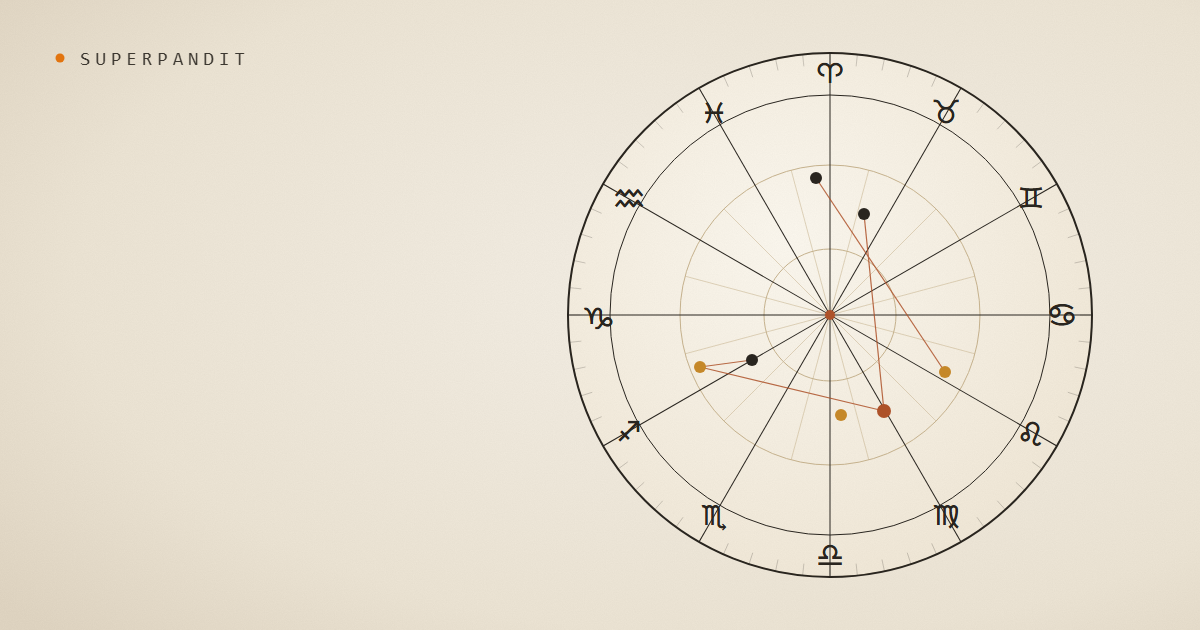
In Tamil Nadu, Kerala, Karnataka and Andhra Pradesh, families rarely ask "how many gunas matched". They ask "how many poruthams" — and, almost always, "is Rajju okay". The 10 poruthams (thirumana porutham, "marriage agreements") are the South Indian system of marriage matching. Like North Indian Guna Milan, they are built from the bride's and groom's birth nakshatras (lunar mansions), but they weigh the factors differently and treat a few as near-absolute. This guide explains each porutham in plain language and how to read the result. For a points-based match with a manglik check, use our kundli matching tool.
How porutham matching works
Each person's janma nakshatra (the lunar mansion the Moon occupied at birth) and rashi (Moon sign) are compared. Most poruthams count the distance from the girl's star to the boy's star and check whether the count falls in an approved set. Each porutham is either "present" (uthamam or madhyamam — good or middling) or "absent". There is no 36-point total: families look at how many are present and, above all, which ones.
The ten poruthams, one by one
- Dina porutham — daily wellbeing and health of the couple, from the star count.
- Gana porutham — temperament: Deva (gentle), Manushya (human) or Rakshasa (fierce). The same idea as Gana koota, which we cover in Gana dosha in kundli matching.
- Mahendra porutham — prosperity and children; present when the boy's star falls at specific counts (4th, 7th, 10th and so on) from the girl's.
- Stree Deergha porutham — the wife's wellbeing and longevity; the boy's star should be well beyond the girl's in the count.
- Yoni porutham — physical and intimate compatibility through animal symbols assigned to each nakshatra.
- Rasi porutham — the relationship between the two Moon signs, similar to Bhakoot in the North; see Bhakoot dosha for the sign-distance logic.
- Rasyadhipati porutham — friendship between the lords of the two Moon signs.
- Vasya porutham — mutual attraction and influence between the signs.
- Rajju porutham — the most important; explained below.
- Vedha porutham — "obstruction"; certain nakshatra pairs are considered to afflict each other, such as Ashwini with Jyeshtha and Bharani with Anuradha.
Rajju: why it carries so much weight
The 27 nakshatras are grouped into five rajjus (ropes), mapped to parts of the body:
- Pada (feet): Ashwini, Ashlesha, Magha, Jyeshtha, Mula, Revati
- Kati (waist): Bharani, Pushya, Purva Phalguni, Anuradha, Purva Ashadha, Uttara Bhadrapada
- Nabhi (navel): Krittika, Punarvasu, Uttara Phalguni, Vishakha, Uttara Ashadha, Purva Bhadrapada
- Kanta (neck): Rohini, Ardra, Hasta, Swati, Shravana, Shatabhisha
- Siro (head): Mrigashira, Chitra, Dhanishta
Rajju porutham is present when the two stars fall in different rajjus. When both fall in the same rajju, traditional texts read it as a strain on the couple's longevity and togetherness — head for the husband, neck for the wife, navel for children, waist for finances and feet for wandering. Many families will not proceed with a match without Rajju, however many other poruthams agree. Some astrologers allow exceptions, for example when the two stars are the same but in different padas, or when the Moon-sign lords are friends; these are regional and debated.
A closer look at Dina, Yoni and Vedha
Dina porutham is calculated by counting from the girl's nakshatra to the boy's and dividing the count by nine; certain remainders are read as favourable. Because the count runs in one direction, swapping the two people does not always give the same answer, which is why astrologers always ask which chart is the bride's.
Yoni porutham assigns each nakshatra an animal — horse, elephant, sheep, serpent, dog, cat, rat, cow, buffalo, tiger, deer, monkey, mongoose and lion — each with a male or female form. Natural enemies, such as cat and rat or serpent and mongoose, are treated as a mismatch; the same animal is ideal. Yoni speaks to physical comfort and day-to-day ease in the relationship.
Vedha porutham is the simplest to check and one of the most respected: a short fixed list of nakshatra pairs is considered mutually obstructive. Besides Ashwini–Jyeshtha and Bharani–Anuradha, the list includes pairs such as Krittika–Vishakha and Rohini–Swati. If the couple's stars form one of these pairs, Vedha is absent, and most families treat it with the same seriousness as Rajju.
Same nakshatra for both partners
A common question is what happens when the bride and groom share a birth star. Traditions differ. Some treat the same nakshatra as acceptable when the padas differ and the star is not on a restricted list; others avoid it entirely because Rajju is automatically shared. A few nakshatras, such as Rohini, Ardra, Magha, Vishakha, Shravana and Revati, are often listed as acceptable for both partners. This is precisely the kind of regional nuance where a local astrologer's view matters.
Poruthams versus Guna Milan
The two systems overlap more than they differ. Gana, Yoni, Rasi, Rasyadhipati and Vasya have direct counterparts in Ashtakoota. The real differences:
- North: a 36-point score, with Nadi (8 points) and Bhakoot (7) as the heavy factors. Our guide to Guna Milan explains the scale.
- South: a count of agreements, with Rajju and Vedha as near-vetoes, and no direct Nadi factor in most traditions.
Because of this, a couple can score well on gunas and still lack Rajju, or the reverse. Neither system alone reads the full chart.
How to read a porutham result sensibly
- Check Rajju and Vedha first. If either is absent, ask an astrologer about exceptions before deciding.
- Then count. Most families look for at least five or six poruthams present, including Dina, Gana, Yoni and Rasi.
- Look beyond the stars. Neither poruthams nor gunas include the 7th house, Venus, the Navamsa chart or mangal dosha. Those need the full birth charts.
- Use dates of birth, not names alone, so the nakshatras are right.
Run a full kundli matching by date of birth to see the koota scores and manglik status together, and if Rajju or Vedha is in doubt, a live astrologer can check the regional exceptions for your community.
Frequently asked questions
How many poruthams are needed for marriage?
There is no single rule, but many families look for at least five or six of the ten, with Rajju and Vedha both present. Dina, Gana, Yoni and Rasi are usually considered important as well.
What happens if Rajju porutham does not match?
Traditionally, both stars in the same rajju is treated as a serious mismatch and many families decline the alliance. Some astrologers apply exceptions, so a specialist should review it before a decision.
Is porutham the same as Guna Milan?
They are related systems built from the same nakshatras. Guna Milan scores eight kootas out of 36 points, while porutham counts ten agreements and treats Rajju and Vedha as near-vetoes.
Can poruthams be checked by name?
Only if the name is the janma naam given from the birth star. Otherwise the date of birth is needed to find the correct nakshatra for each person.
Sources
Related reads
Keep exploring
Researched and written by SuperPandit’s AI, grounded in our own astronomical engine. Spotted something off? Tell us.